Tuesday, January 6, 2009

Modern Kitchen Lighting


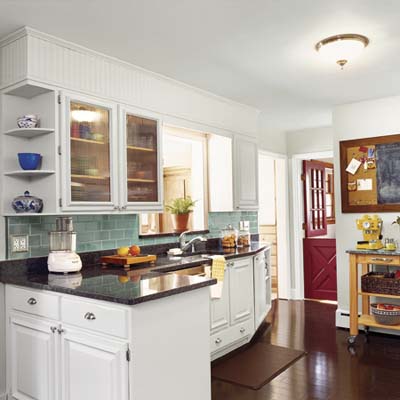
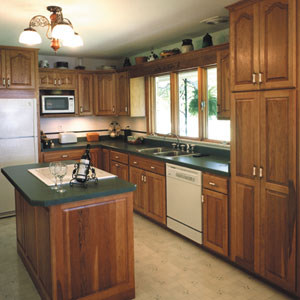
Find Ideas for kitchen lighting. Lighting a kitchen is not like lighting other rooms in your house. Kitchens demand several types of lighting - such as task lighting and ambient lighting - that you'll want to incorporate equally into your kitchen design.

When you cook it is extremely important that you can see what you're doing, so lighting above the stove and countertops is definitely a must. If you have deep cabinets in dark corners, you might even want to consider installing lights inside them so you can see what's hiding in the back. One important tip is to keep lighting over the table soft - for best results, put on a dimmer switch so you can have as much or as little light as you need in different situations.

Deciding on the lighting for your kitchen means you must consider both the type of fixtures you want and their ideal placement. Lighting variety is limited only by your wants and desires - styles range from contemporary to traditional, in materials that include pewter, nickel, bronze, brass and glass.

Task areas should have sufficient light so you can easily see what you're working on without too much brightness or eye-straining dimness. Ambient lighting should light the rest of the room, to avoid the spotlight effect. This lighting should be just enough to see by, without being so bright you and your family or guests feel uncomfortable. A dimmer switch is great for ambient lighting as well, as it allows you to control the amount of light for each situation.

There are also a number of options to consider in terms of fixtures. Pendant lights are a decorative way to flood your counter in soft pools of light, while track lighting gives you the flexibility to send light exactly where you need it.

You might have found the perfect light fixture, but don't forget the bulb! To make the most of your lighting, try using bulbs with different beam spreads for different effects. Flood lights are great for creating widespread lighting, while spotlights are ideal for shedding light on specific areas.

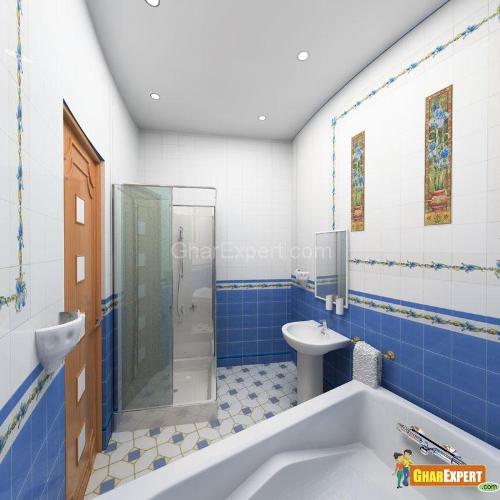
Bathroom Tile and Painting Photos Idea


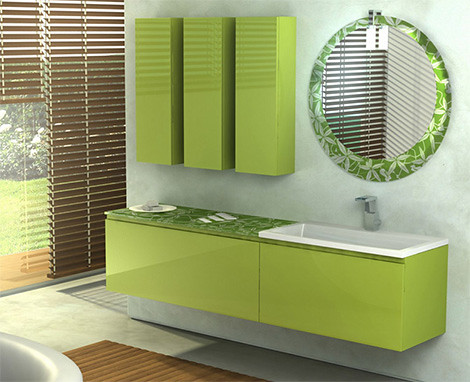
Choose bathroom paint color and Bathroom Tile according to the taste of the individual, his or her emotional state and the feel you would like in your bathroom such as feeling relaxed or revitalized, energized, formal and royal, cozy, casual, creative or artistic. While deciding the color, it is best to keep a color wheel to consult choosing colors for your bath. There are some color basics that help you in choosing the right bath color scheme. Warm colors energize and are invigorating. Cool colors have a calming and soothing effect. Analogous colors or colors that are next to each other on the color wheel will make bath space look serene and relaxing. Complementary colors or colors that are across each other will give creative, artistic and jazzy look to your bathroom.

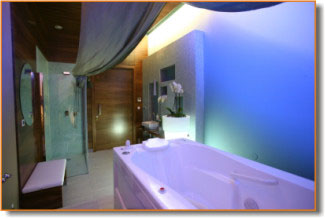
Bathroom colors schemes with high contrasts such as black and white or white and royal blue make the bath look formal and spotless. Low contrast color combination such as beige and shutter green and mint green and forest green lend a casual look to your bath. Latest trendy bathrooms can change their color according to your mood or the time of day, energizing and invigorating you in the morning and soothing you and helping you to relax before going to bed at night. The fashion in bathroom colors is to create harmonious color palettes, using the principles of color and light therapy, to help you heal and live life at best. There are showers with fiber-optic lights in different colors that can be lit selectively according to the feel you want at the moment, mood lighting in the bathroom and light fixtures that can dim down at night or for relaxing mood but can be very bright when you want them to be can help you have the best bath experience.

Give our bathroom a professional finish by painting it in unique color themes. You may get the inspiration from Nature, art pieces, dresses for a color palette. Even eggshell and pebbles can inspire you for a soft bathroom color palette. If you are choosing a monochromatic color scheme, you can add a visual balance and variety using the accessories in contrasting colors. Choose towels and decorative pieces in a shade lighter or darker than your walls. Do remember that when you are doing makeup in the bathroom vanity area, the colors reflecting in the mirror can fool you eye, whether they are bold or muted. So, you may need to compensate them with other colors for a balanced and natural look.

Colors cast shadows on each other or highlight the contrasting colors. White with beige may look dirtier than white with black. Lilac with blue looks bluer than lilac with white. To balance rectangular or square tiles and countertops, add plants and greenery to your bath to lend asymmetrical and natural beauty and add refreshing accent color to your bath. Tiles on walls and for flooring can also add beautiful colors to your bath. Blue glass tiles recreate the feel of water and sky while earthy green tiles look great for Nature lovers. Use red and other dramatic colors sparingly and with other colors to balance them out for greater effect. They are best used as accessories and towels. However, if you still want to use red in your bathroom vanity area or powder room, choose shades of red wisely such as rose and coral.

Sunday, December 28, 2008

Master Bedrooms Interior Design Ideas


Master Bedroom Design Photos Ideas. A bedroom is a large room where people usually sleep for the night and/or for relaxation during the day.

Many houses in North America, Australia and Europe have at least two bedrooms – usually a master bedroom (dedicated to the heads of the household, such as a husband and wife) and one or more bedrooms for either the children or guests.

In some jurisdictions there are basic features (such as a closet and a "means of egress") which a room must have in order to be qualify as a bedroom. Nevertheless, some real estate agents may stretch the definition when listing a home for sale.

In buildings with multiple self-contained housing units (e.g., apartments), the number of bedrooms vary widely. While many such units have at least one bedroom—frequently, these units have at least two—some of these units may not have a specific room dedicated for use as a bedroom. (These units may be known by various names, including studio, efficiency, bedsit, and others).

Furniture and other items in bedrooms vary greatly, depending on taste and local tradition. For instance, a master bedroom may include a bed of a specific size (double, king or queen-sized); one or more dressers (or perhaps, a wardrobe armoire); a nightstand; one or more closets; and carpeting. Built-in closets are less common in Europe than in North America; thus there is greater use of freestanding wardrobes or armoires in Europe.

Bedding used in northern Europe (especially in Scandinavia) is significantly different from that used in North America and other parts of Europe.

Some bedrooms also include such items as a make-up desk, television, air conditioning and various accessories (such as lamps, telephone and an alarm clock).

Sometimes, a master bedroom is connected to a dedicated bathroom, often called an ensuite.

Bath Room Lighting Design Photos Idea


Think about having more than one bathroom light in your bathroom. Brighten up your bathroom with stylish bathroom lighting collection. Bathroom Exhaust Fans with Night Lights: Pegasus Associates Lighting has 2 models of residential bathroom ceiling exhaust fans with night lights. The Toilet in The Dark and A Light Turns On.